

Religious Education
Intent
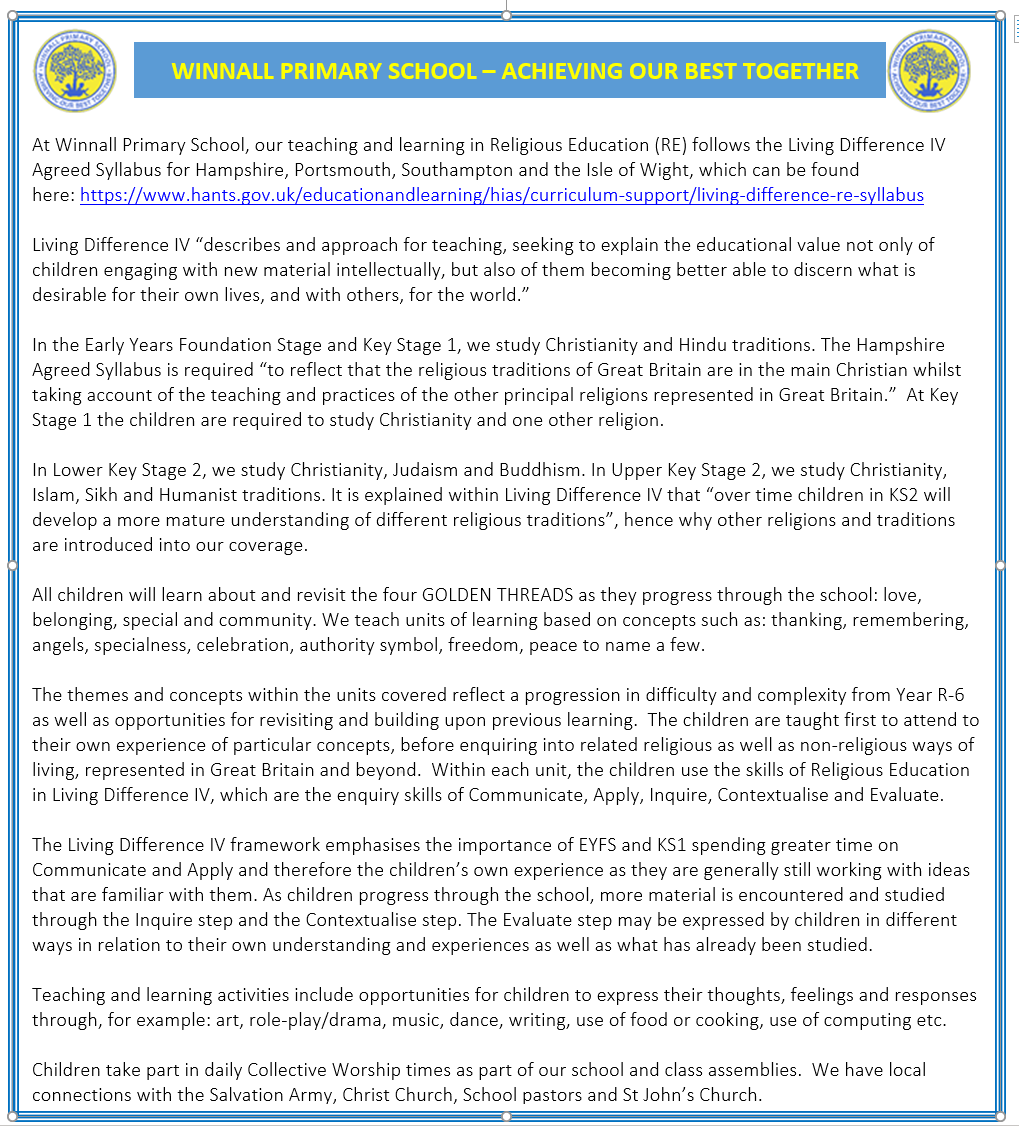
Overview
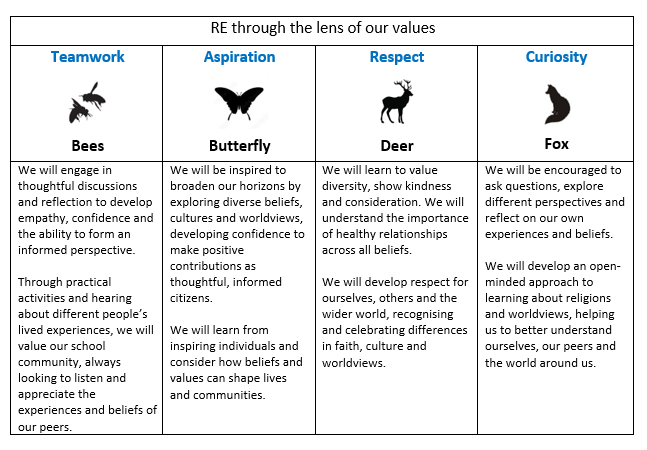
Through the lens of our values...
What does a theologian look like at the end of...
What does a Winnall theologian look like by the end of Year 1?
- Recognise and talk about their own experiences of community, belonging, special and love.
- Recognise what they have learned about these concepts within the religious traditions studied.
- Begin to recognise that people may understand and experience beliefs and concepts in different ways.
- Begin to make links between their own experiences and those of people they encounter in RE.
- Begin to recognise what may be valuable or important about these concepts for people, communities and themselves.
What does a Winnall theologian look like by the end of Year 2?
- Describe what they have learned about community, belonging, special and love and how these are understood within the traditions studied.
- Describe some ways in which beliefs and concepts are expressed through stories, celebrations, worship and everyday life.
- Recognise that people may have different experiences and understandings of beliefs and concepts.
- Make simple connections between their own experiences and the experiences of others.
- Begin to discern what may be valuable about beliefs and concepts for people, communities and themselves.
What does a Winnall theologian look like by the end of Year 3?
- Accurately describe the meaning of key concepts and words explored through the religious and non-religious traditions studied.
- Describe how beliefs and concepts are expressed through stories, practices, celebrations, worship and the lives of people.
- Recognise and describe similarities and differences in how people understand and experience beliefs and concepts.
- Explain how their own responses and experiences relate to those of people they encounter through RE.
- Begin to discern and describe what may be valuable about beliefs and concepts for people, communities and themselves.
What does a Winnall theologian look like by the end of Year 4?
- Accurately explain the meaning of key concepts and words within the religious and non-religious traditions studied.
- Explain how beliefs and concepts are expressed and experienced by different people and communities.
- Recognise that there can be different perspectives and interpretations within the same religious or non-religious tradition.
- Explain how their own responses relate to their experiences and, where appropriate, the experiences of others.
- Discern and discuss what may be valuable about beliefs and concepts for people, communities and themselves.
What does a Winnall theologian look like by the end of Year 5?
- Accurately explain the meanings of concepts and words encountered within the religious and non-religious traditions studied.
- Explain how beliefs and concepts can influence the lives, choices and communities of people.
- Explore different perspectives and interpretations, recognising that people within the same tradition may understand beliefs in different ways.
- Explain how their own responses relate to experiences and events in their own lives and the lives of others.
- Discern and discuss the value of beliefs and concepts, including the questions and issues they may raise.
What does a Winnall theologian look like by the end of Year 6?
- Accurately explain the meanings of key concepts and beliefs within the religious and non-religious traditions studied.
- Explain, using relevant examples, how beliefs and concepts can influence the lives of individuals, communities and wider society.
- Explore and explain different interpretations and perspectives, recognising diversity within and between traditions.
- Respond thoughtfully to questions raised by their learning, making connections with their own experiences and those of others.
- Discern and explain the value and significance of beliefs and concepts for people, communities and themselves.