


Design and Technology
Intent

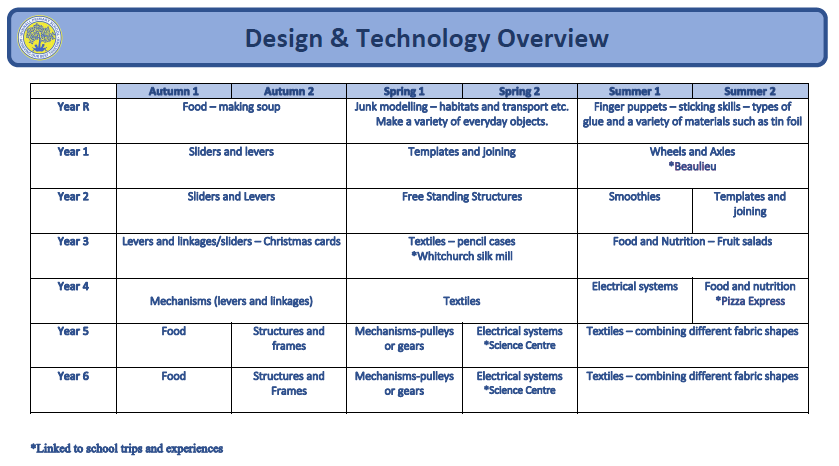
Overview
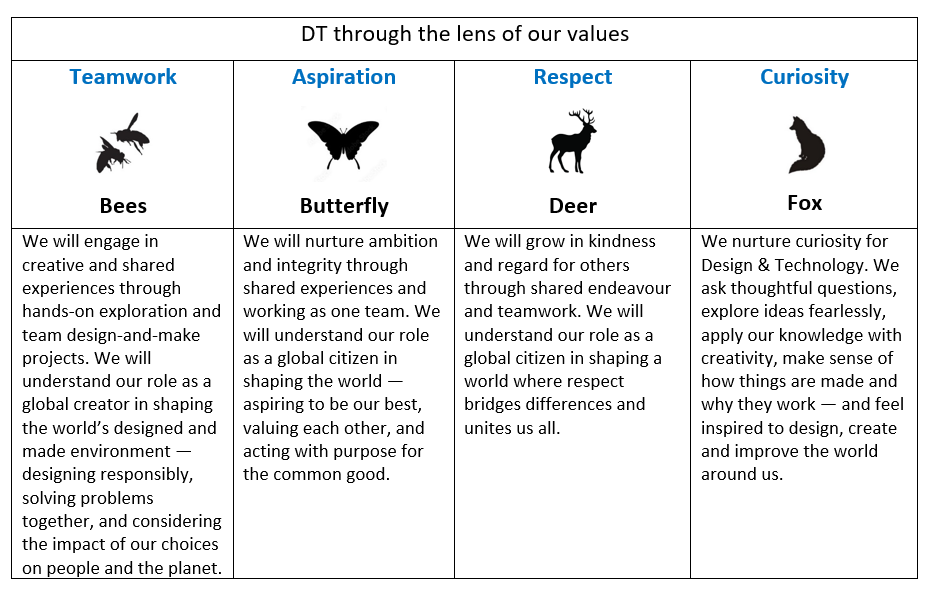
Through the lens of the values
What does a designer and technologist look like at the end of ...
What does a designer and technologist look like by the end of Year 1?
- Explore and investigate simple existing products and designs
- Use a range of simple tools and materials safely
- Design simple products by saying or drawing what they will make
- Make simple products, choosing and using basic materials and components
- Evaluate their own ideas and simple finished products, saying what they like and what they could change
What does a designer and technologist look like by the end of Year 2?
- Design purposeful, functional, appealing products for themselves and other users based on design criteria
- Generate, develop, model and communicate their ideas through talking, drawing, templates, mock-ups and, where appropriate, ICT
- Select from and use a range of tools and equipment to perform practical tasks safely
- Select from and use a wide range of materials and components, including construction materials, textiles and ingredients, according to their functional properties and aesthetic qualities
- Evaluate their ideas and products against design criteria
What does a designer and technologist look like bythe end of Year 3?
- Research existing products and use simple criteria to say what works well and what could be improved
- Generate thoughtful design ideas based on what users want, and explain clearly what their product will look like and do
- Use annotated sketches, diagrams and models to develop and communicate their design ideas
- Select and use appropriate tools and equipment with increasing skill and safety to cut, shape and join materials
- Choose materials and components based on their properties and how they look and feel
- Evaluate their finished products against their original design ideas and suggest practical improvements
What does a designer and technologist look like by the end of Year 4?
- Develop and communicate detailed design proposals using sketches, cross-sections, templates and, where appropriate, digital tools
- Select and use a wider range of tools and equipment accurately and safely to perform practical tasks
- Match materials and components to their intended use, considering function, durability and appearance
- Build and explore simple mechanical systems such as levers, linkages and wheels
- Investigate and use simple electrical circuits where relevant to their designs
- Evaluate their own and others’ products, explaining how well they meet the design brief and suggesting improvements
What does a designer and technologist look like by the end of Year 5?
- Understand the purpose of research and user-centred design
- Have a greater appreciation of how design and technology shapes the world around them
- Articulate what makes designs effective, sustainable and fit for purpose — locally and beyond
- Understand what D&T actually is — not just making things, but solving real problems for real people
- Use foundational knowledge of materials, mechanisms and systems to undertake meaningful design projects
- Develop precision, independence and confidence in practical skills
What does a designer and technologist look like by the end of Year 6?
- Have a greater appreciation of how design, technology and needs change over time — in Winnall and the wider world
- Understand how design choices impact sustainability, including energy use, environmental impact and renewable materials
- Know how social, environmental and economic factors drive design innovation and technological change
- Know how physical and environmental factors influence design decisions — such as material choice, energy efficiency and sustainability
- Be able to carry out purposeful design enquiries and projects, using skills developed throughout their time at Winnall
- Talk about compelling learning experiences — including research, design development, making and evaluation — with enthusiasm