


Computing
Intent

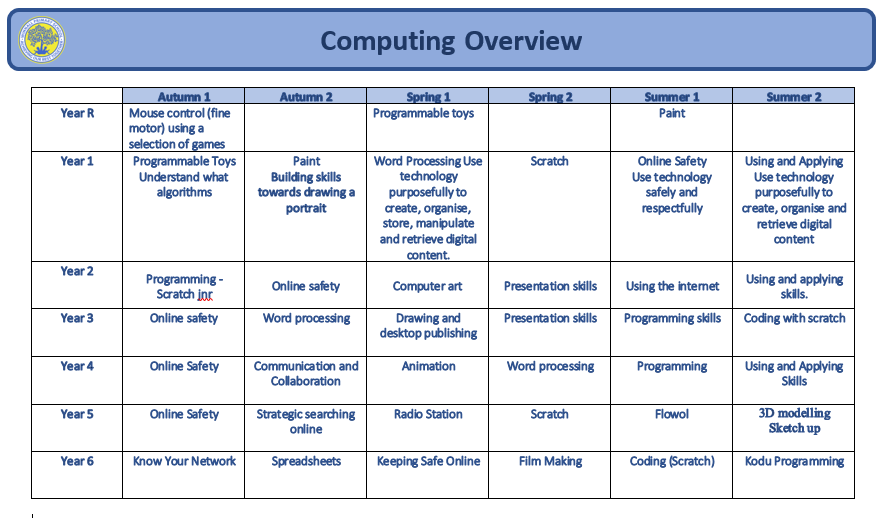
Overview
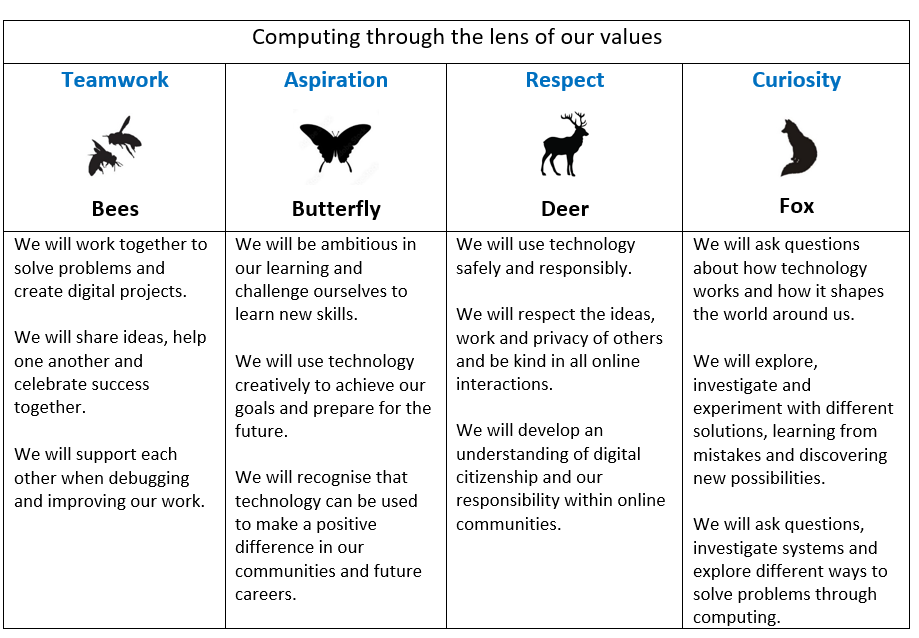
Through the lens of our values
What does a digital citizen look like at the end of ...
What does a Winnall digital citizen look like by the end of Year 1?
- Knows that technology is used by everyone and should be treated with care and respect
- Understands which personal information (name, address, school, photos) must not be shared online without an adult’s permission
- Knows to tell a trusted adult if they see something that upsets them or if they feel uncomfortable online
- Learns to communicate kindly and use polite words when using devices or talking online
- Recognises that people online may not always be who they say they are and knows to be cautious
What does a Winnall digital citizen look like by the end of Year 2?
- Understands that information or photos shared online can stay there permanently and should be thought about carefully before posting
- Can explain what personal information is and why it must be kept private; knows to use strong passwords and keep them safe
- Knows how to use technology responsibly — balancing screen time with other activities
- Recognises the difference between being kind and being unkind online; knows how to report unkind behaviour
- Knows they should ask permission before using the internet or sharing content created by others
What does a Winnall digital citizen look like by the end of Year 3?
- Can distinguish between facts, opinions and beliefs online and understands that not everything on the internet is true
- Understands how to adjust privacy settings to control who sees their information and content
- Knows how to respond appropriately to upsetting or harmful online content — stop, close it, tell an adult
- Understands the importance of crediting others’ work and asking permission before using or sharing it
- Recognises that online interactions affect people’s feelings just as face-to-face interactions do
What does a Winnall digital citizen look like by the end of Year 4?
- Understands what a digital footprint is and how online actions shape their reputation now and in the future
- Recognises online bullying and how it differs from offline bullying; knows several ways to report it and seek help
- Thinks carefully before sharing images or messages — understands how they might affect others and how they may be used
- Knows to respect others’ views and treat people with kindness and respect in all online spaces
- Understands the importance of copyright and why they must not pass other people’s work off as their own
What does a Winnall digital citizen look like by the end of Year 5?
- Understands how online communication differs from face-to-face and how tone can be misunderstood
- Recognises that what feels like a joke to one person can be hurtful to others; knows where to get help if bullied online
- Understands the impact of technology on health and wellbeing — including screen time, sleep, posture and mental health
- Knows how to keep personal information secure, including the risks of sharing passwords and details online
- Can identify reliable sources, recognise misleading content and understands that information may be tracked online
What does a Winnall digital citizen look like by the end of Year 6?
- Understands how online interactions, shared content and digital behaviour affect emotions, wellbeing and reputation
- Recognises the features and risks of social media, online platforms and messaging apps; knows age-appropriate rules
- Critically evaluates online content — identifies fake news, scams, phishing and manipulated images or videos
- Takes responsibility for their digital footprint and understands that shared content may be seen widely and cannot be fully deleted
- Models positive, respectful and ethical online behaviour; knows how to support others and report concerns safely